
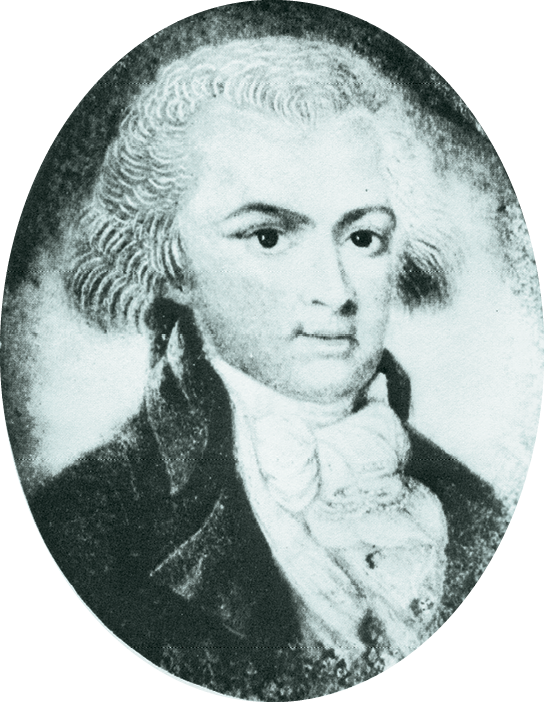
Colonel Isaac Hayne Jr.
Colonel Isaac Hayne Jr.
Born on September 23, 1745, in Colleton County, Isaac Hayne was the only son of Isaac Hayne and his third wife Sarah Williamson. He inherited Hayne Hall Plantation, consisting of 23 enslaved people and 900 acres at Jacksonboro, from his father. Hayne and his partner William Hill owned the Aera Iron Furnace, which produced cannon and ammunition for Patriot forces during the Revolutionary War. At the time of his death, he owned Sycamore and Pear Hill Plantations along with lots in Beaufort and Charleston. He also owned 6,500 acres, mainly in the backcountry of South Carolina and at least 1,000 acres in Georgia. Hayne was described in a letter by John Rutledge to John Dickinson as “a planter, eminently domestic, a country gentleman, whose pride and pleasure it was to maintain that character par excellence.”
Hayne served in the Colleton County militia as a captain. In the latter part of 1775, he was stationed at Dorchester. In January of 1776, Colonel William Moultrie sent Captain Hayne’s detachment of 163 men to post at the northwest corner of Broad Street and Meeting Street in preparation for an attack by the British. By May of 1780 Charleston was occupied by British forces and Hayne was a senior captain of the Round O company, a mounted company from Colleton County stationed outside of the city. When American forces inside Charleston surrendered, Hayne and his men presumed that the terms of surrender applied to them, so they disbanded and returned to their homes. This is where the events that led to Isaac Hayne’s execution began.
There are several accounts with differing reasons as to why and how Hayne returned to Charleston after the surrender of the city. What is known is that Sir Henry Clinton, the commander in chief of the British forces, issued a proclamation stating that “all our militia prisoners on parole, not taken by capitulation, or in confinement, at the surrendering of Lincoln, to become British subjects, or return instantly to the commandant of Charleston.” Colonel Robert Ballingall, commander of the Colleton County loyal militia, urged Hayne to comply with the proclamation. Isaac Hayne traveled back to Charleston in the midst of a personal crisis. His family was stricken with smallpox. His eighteen-month-old daughter had died, and his wife and other children were deathly ill. His main interest in traveling to Charleston was to procure medicine and find a physician to attend his family. Upon his arrival, Hayne reported to the commandant Brig. General James Patterson who refused to allow him to return to his family unless he swore allegiance to the crown and became a loyal British subject. If he did not swear allegiance he would be imprisoned. Hayne, desperate to return to his family, declared allegiance to King George III. He expressly objected to the agreement to take up arms against his fellow Americans but swore allegiance nonetheless and returned to his family.
Hayne tried to remain neutral in the fight and kept his sworn word for nearly a year. Sometime in June 1781, Hayne gave in to repeated requests from the Patriot militia to return to service and was given a commission as a colonel. His return to the Patriot cause encouraged some 200 men to follow him and boosted the militia's numbers. Hayne was captured on July 8, 1781, in a surprise attack by the British on his camp. He was immediately taken to Charleston and imprisoned in the jail at the Royal Exchange and Customs House. On July 26, 1781, Hayne received notice from Town Major Charles Fraser stating that he would face a Court of Enquiry. But, instead of a trial, the Commandant and Lord Rawdon notified him that he would be executed on July 31, 1781. Hayne asked for time for his children to arrive so that he could say goodbye to them. The Commandant and Rawdon considered the request and changed the date of execution to August 4, 1781.
On the morning of August 4, 1781, Colonel Isaac Hayne was led from the Exchange building through the streets of Charlestown to meet his fate at the gallows. He chose to walk instead of ride in the wagon with his coffin. The night before, the coffin was placed in the jail cell with him as a reminder of his impending execution. At the place of execution, according to witnesses, he placed the hood on his own head and signaled he was ready. Hayne’s execution was met with controversy and anger from the American forces who vowed revenge against the British.
Despite petitions for leniency by Lt. Governor William Bull II and pleas from others for his pardon, Isaac Hayne was executed on August 4, 1781. He was hanged by the British without a proper trial. His execution was met with ire by the Patriots, who saw their ranks increase, and essentially made him a martyr for the American cause in the Revolutionary War.
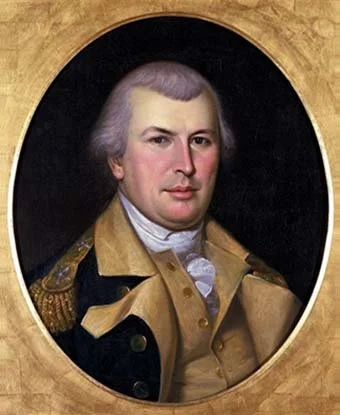
Major General Nathanael Greene
Major General Nathanael Greene
Nathanael Greene’s rise to prominence as one of the most skilled and celebrated generals of the American Revolution appears unlikely based upon his early life. Greene was born to a devout Quaker family in Rhode Island in August of 1742. Greene had a deep interest in education, a characteristic frowned upon by the Society of Friends. In July 1773, the local Quaker meeting dismissed Greene for being caught in a "house of public resort".
As relations between Great Britain and her North American colonies spiraled toward armed conflict, Greene helped establish a local militia unit, the Kentish Guards. A visible limp prevented Greene from joining the Guards. The Rhode Island Assembly, however, commissioned Greene a Brigadier General in the newly formed Army of Observation which marched to Boston following Lexington and Concord.
Greene’s early military career insured that the Continental Congress never regretted its decision to promote him. After the Siege of Boston in 1776, Greene proved to be an able commander when he took command of the city upon the British retreat. However, the young general’s career was not without blemish: during the New York Campaign, he lost Forts Washington and Lee. Although racked by guilt for these loses, Greene subsequently led a column of troops to victory at the Battle of Trenton and the Battle of Princeton. Following the Battle of Brandywine and the Battle of Germantown in the Pennsylvania campaign in 1777, the Continental Congress appointed him Quartermaster General under the condition that he retain the right to command troops in the field. He performed his duties as Quartermaster brilliantly, skillfully supplying Continental troops while dealing with logistical and bureaucratic challenges.
Greene’s most notable appointment came in October 1780 when the Continental Congress granted Washington with the power to appoint a new southern commander. Washington selected Greene. Up to that point, Congress struggled to select the right commanders in the South: Robert Howe lost Savannah, Benjamin Lincoln lost Charleston, and Horatio Gates was defeated at Camden, South Carolina.
Greene’s martial skills shone brightest as commander of the southern theater. Soon after he took command, the tide of war began to turn in favor of the Patriots. Greene decided to divide his troops in the hopes that the British would be forced to follow suit. The tactic worked as Greene's subordinate, Brig. Gen. Daniel Morgan won a victory at Cowpens early in 1781. After the British victory over at Greene at the Battle of Guilford Courthouse, the much depleted British force under Charles Cornwallis withdrew to Wilmington while Greene and his men turned south to reconquer the South Carolina backcountry. Throughout 1781, Greene steadily drove the British back to an isolated position at Charleston, which they abandoned the following December.
George Washington trusted Greene immensely, and that trust only grew over the course of the war. Greene’s legacy endures. He is one of the most celebrated generals of the Revolution for his crucial role in wresting the southern theater from the British and securing a revolutionary Patriot victory.
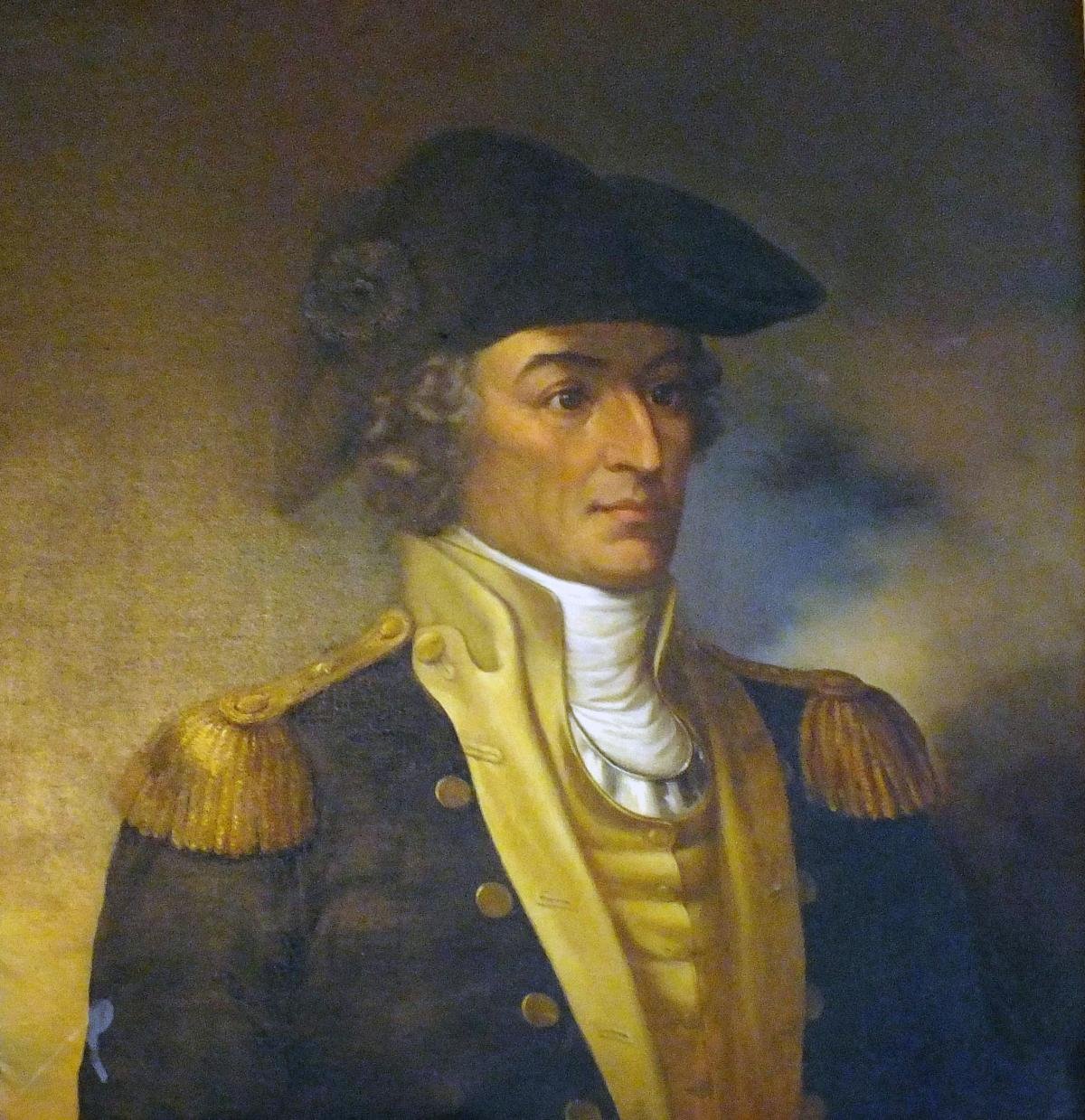
Brigadier General Francis Marion “Swamp Fox”
battle at parker’s ferry
Parker’s Ferry was a major thoroughfare crossing the Pon Pon River (Edisto River) about 33 miles west of Charleston. Here Brigadier General Francis Marion planned a famously successful ambuscade. British and Loyalist troops were operating in the summer of 1781 throughout the Lowcountry around Charleston, foraging for provisions and attempting to suppress the Patriot militia. Colonel William Harden commanded a small Patriot militia band south of the Pon Pon River and asked for more assistance in resisting these British patrols.
On August 10, 1781, Major General Nathanael Greene dispatched Marion to assist Harden. After the aborted ambush at Godfrey's Savannah on August 27, Marion sent Lieutenant Colonel Peter Horry to Cheeha where there were three British schooners taking on rice, guarded by 30 men. The British heard the Patriots approach and sailed downriver before they arrived. Marion learned that a Loyalist force of 100 troops commanded by William “Bloody Bill” Cunningham was at the Pon Pon River to join a larger force of British regulars, Hessians, and other Loyalist militia. Patriot patrols reconnoitered the British positions as too strong to attack. At night Marion placed men on the causeway to observe the British movements. A British patrol came out looking for Marion's force but were not able to find their camp in the dark. On August 29, the British moved to Isaac Hayne's Plantation and Marion followed again looking for a fight and he set up his camp five miles away to the east.
Marion placed his 445 troops in the thick woods about the causeway leading to Parker’s Ferry. Several dragoons galloped forward to entice the more than 600 Loyalist, British and German troops to chase them back into a Patriot trap. As shots were fired, British Lieutenant Colonel Ernest Leopold von Borck ordered Major Thomas Fraser and his dragoons to charge to the scene. Fraser’s troops galloped blindly into the “gauntlet” that Marion set for them.
Marion reported the action that day: “The 30th I went below them and formed an Ambuscade in a thick wood Within a mile of Parkers Ferry within forty yards of the road which the Enemy must come, here I Informed of upwards of one hundred toreys under a Col. Cunningham from Dorchester & Stono Laying on the banks of the river at Parkers Ferry waiting for Lt Col De Benin [Fredrich von Benning] who Comman(d)ed the Enemys force. My right Division of about Eighty men was Commanded by Maj [Harden] who I ordered to retire one hundred yards from the Line, & to march up when the firing began on the left; my Swordsmen of Sixty horse I sent under Maj [George] Cooper to fall in the rear of the Enemy to Draw their Attention that way & to follow them whenever they moved, & to keep in sight, with positive orders to charge their Enemys rear at all hazards, as soon the firing became Generall. Here I waited until sunset when part of the toreys from the ferry came on which I Intended should pass, but they discovered on of my men & Challenged, not Answering[,] they fired, & I could not restrain the men longer they returned in which made them immediately return back on the spur. I sent a few horse after them which rund them a Cross the river. The enemy hearing the fire & being on their way down Immediatly sent their Cavalry to resque them & came on full speed, & receved the fire of the whole Line Runing The Gauntlet through them. The Infantry Immedia[tely] Appeared before us & a heavy fire Insued which Continued for Some time, but unluckily some Villains Cryed out they ware flankings on the right & penetrating the wood[;] they immediately broke & while We ware rallying them & forming the second[d] Line in front of the horses, which was piquetted two hundred yards from the first line[,] the Enemy took that Oppertunity, carry off their field p & wounded & retreated on a trott, Leaving twenty men & twenty three horses Dead on the spott.”
Harden's men moved back 100 yards from the ambush line so they could be used as reserves. Major Samuel Cooper’s 60 swordsmen were told to attack the rear of the enemy after the ambush was initiated. They then waited for the British. Lieutenant Colonel Ernst Leopold von Borck left Hayne's Plantation in mid-afternoon with his infantry. He had two pieces of artillery in front of the column while Fraser and his mounted South Carolina Royalists were in the rear of the column. It was almost dark when they stumbled into a firefight between Marion's men and Loyalists who just discovered them. Fraser sent Lieutenant Stephen Jarvis charging forward while he placed three other divisions on the road and to the left and right of the road. Mounted Patriots charged Jarvis, who reversed course quickly. Fraser believed that these were Harden's men and ordered his cavalry in full gallop to intercept them. Marion now had the British right where he wanted them and instantly Fraser's horsemen were surrounded. At a distance of 40 yards, the Patriots opened up with buckshot and downed the British dragoons. Fraser rallied and tried to charge, but the Patriots delivered a second and a third volley. There was no way for Fraser to attack into the thick trees and nearby swamp, so he withdrew down the causeway, down the full length of the ambush. British Captain Archibald Campbell was wounded twice, and Fraser was badly bruised when his horse was killed and the rest of his cavalry rode over him as he lay in the road.
British casualties at 125 killed and 80 wounded were heavy, while Marion only suffered one man killed and three wounded. The Patriots continued to occupy the causeway for three more hours until Marion saw a large body of infantry with a field piece coming their way. His riflemen fired upon the field piece, wounding and killing some British accompanying it. Marion’s victory here directly impacted the Battle of Eutaw Springs, nine days later, by depriving British horse not available to fight there on September 8. Marion maneuvered through enemy territory back to the Santee and joined Greene to command that battle’s right militia line at Eutaw Springs. Parker’s Ferry is the exemplar of Marion’s guerilla warfare tactics which contribute to the extraordinary legend of the Swamp Fox. The battlefield is located near Jacksonborough which holds an impressive cluster of historic sites, including Pon Pon Church, the grave of the Southern martyr Isaac Hayne, and the capital of South Carolina in 1782 where civil government was re-established.